Showing posts with label Recipe Evolution. Show all posts

Tuesday, April 28, 2020

Evolution of Cakes

Cakes 

When we broach the topic of cake, we start getting into passionate territory.

People define important moments in life, like birthdays, weddings and holidays, with cake and specific cake variety like cheesecake, chocolate cake, angel food cake and fruit cake inspire strong feelings of likes and dislikes. 

CAKE is a form of sweet food made from flour, sugar, and other ingredients, that is usually baked. In their oldest forms, cake were modification of bread but cakes now cover a wide range of preparations that can be simple or elaborate, and that share features with other desserts such as pastries, meringues, and pie.

The most commonly used cake ingredients include flour, sugar, eggs, butter or oil or margarine, a liquid and leaving agent such as baking soda or baking powder.


Common additional ingredients includes, dried fruits, candied, fresh fruits, nut, cocoa and extracts such as vanilla, with numerous substitutions for the primary ingredients.

Cakes can also be filled with fruit preserves, nuts or dessert sauces (like pastry cream), iced with butter cream or other icings and decorated with marzipan, piped borders or candied fruits.

The word CAKE is Viking origin, derived from the Norse work "KAKA" and denotes a baked flour confection sweetened with sugars or honey.

The First cakes made  are actually quite different from the ones we eat today.  Interestingly, the ancient Egyptians were the first culture to exhibit baking skills and during Ancient Times the cakes were more bread-like in appearances and sweetened with honey. 

The Greeks also had an early form of cheesecake, while the Romans development versions of fruitcakes with raisins, nuts and other fruits. 

The ancient Greeks called cake "plakous" which was derived from the word "flat" "plakoeis". 
It was baked using flour mixed with eggs, milk, nuts and honey. They also had a cake called "satura", which was a flat heavy cake.

During the Roman period, the name for cake became "placenta" which was derived from the Greek term.  A placenta was baked on a pastry base or inside a pastry case.

The Romans probably perfected the practice of adding yeast as a leavening agent to cake and later the Italians in the 16th century developed the art of leavening without yeast by adding whipped eggs to butter.

Both method created a lighter cake but was time consuming and could be tricky, by the mid - 1800s, the introduction of bicarbonate soda and baking powder made it easier to bake an airy cake quicky and consistently.

Supply and demand played a part in it's genesis. The precursors of modern cakes were first baked in Europe sometime in the mid - 17th century.  This is due to primarily, advances in technology, more reliable ovens, manufacture or availability foods molds and ingredients.

At that time, cake hoops-round molds for shaping cakes that were placed on flat baking trays were popular.They could be made of metal, wood or paper. Some were adjustable.  Cake pans were sometimes used.

It was not until the middle of 19th century that cake as we know it today (made with extra refined white flour and baking powder instead of yeast) arrived on the scene. The treat became popular and considered a luxury as sweet  ingredients like sugar and chocolate were expensive.


During the Great Depression, there was a surplus of molasses and the need to to provide easily made food to millions of economically depressed people in the United States.

One company patented a cake _ bread mix to deal with the economic situation and thereby established the first line of cake in a box.
In so doing, cake as it is known today, became a mass produced goods rather than a home or bakery made.

Later, during the Post - War Boom, other American companies(notably General Mills) developed this idea further, marketing cake mix on the principle of convenience, especially to housewives.

When sakes dropped heavily in the 1950s, marketers discovered the baking cakes once a task at which housewives could Exercise skill and creativity had become dispiriting.

This was a a period in American ideological when women, retired from war time labor force, were confined in the domestic sphere.

Today cake is obviously used to celebrate occasion like weddings, engagements, anniversaries, holidays and of birthdays.

But when did we actually start celebrating birthdays with cake and why?

Notably, in Ancient Greece, it was a tradition to celebrate the births of their gods and for the celebration of goddess Artemis' birth, people would bake a round cake in honour to symbolize the moon.

The cake was decorated with lit candles so it would glow like the moon.

Then by 13th Century, German children began celebrating their birthdays called "Kinderfest" with cakes that were also lit with candles, candles stood for the light of life.

Cakes are frequently described according to their physical forms. Cakes may be small and intended for individual consumption.

Larger cakes may be made to be sliced and served as part of a meal or social functions.

Common shapes include
Bundt cakes
Cake balls
Conical
Sheet Cakes
Swiss rolls cakes 
Cupcakes
Larger Cakes 

Cakes may be classified according to the occasion for which they are intended.
For example, 
wedding cakes, 
birthday cakes, 
cakes for first Communion, 
passover plava, stollen/ chocolate log for Christmas and babka and simnel cake for Easter are all identifies primarily according to the the celebration they are intended to accompany.
The cutting of wedding cakes constitutes a social ceremony in some cultures. The Ancient Roman marriage ritual of confarreatio originated in the sharing of cakes

Cakes can broadly be  divided into several categories base primarily on ingredients:
1. Butter cakes
2.Chocolate cake 
3. Chiffon cakes
4. Yellow cake
5. Coffee cakes
6. Bakes flourles cakes
7.  Carrot Cakes
8. Yeast cakes
9. Pound Cakes 
Cheese Cakes 
Zucchini Cakes 
White cakes 

Others too uses it mixing techniques or methods of preparation to describe it, such includes 
Cream Cakes 
Sponge Cakes 
Melted Method/ Oil Based Cakes 
Rubbed-in Cakes.

Whether you like cake with frosting or without, chances are that you have a weakness for some form of this baked confection.

Who do we have to thank for this traditional dessert? 

NO one knows. Baking is an interesting craft, and the process of adding a bit of this and a pinch of that leads to unexpected and sometimes exciting results.

 Cakes remains ubiquitous in the world and have kept their image as treats and maintain their ceremonial importance. 

Monday, April 27, 2020

How Salad Foods Came about

Revolution of Salad 

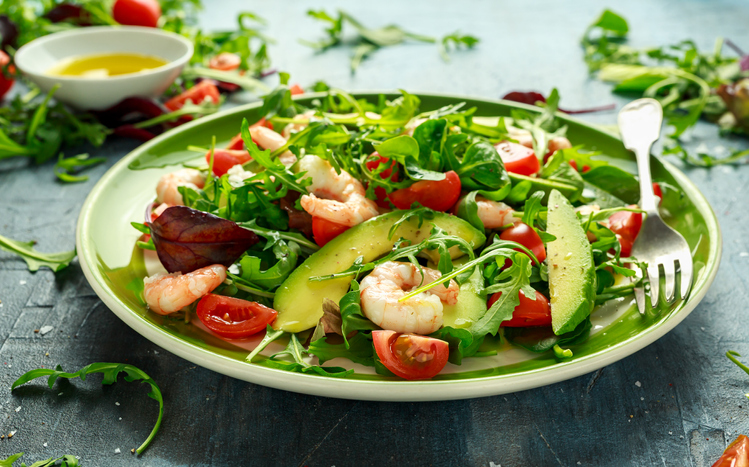
Salad is a dish consisting of a mixture of small pieces of food, usually vegetables or fruits. However, different varieties of salad may contain virtually any type of ready-to- eat food.

Salads are typically served at a room temperature or chilled with notable exceptions such as a South German Potato Salad which can be served warm.

The basis for the word Salad is " SAL" meaning salt.
This was chosen because in ancient times, salt was often an ingredient in the dressing, even now. 

Salad is a term derived from the Latin word "sal" (salt) which yielded the form salata, " salted things" such as the raw vegetables eaten in a classical times with a dressing of oil, vinegar and salt. 
The word turns up into old French word as Sa' lade and then in the late 14th century English translated into Salad or sallet.

Salad has been in  around since ancient times. 

Food historians tell us salads were enjoyed by ancient Romans and Greeks, but as time progressed, salads became more complicated. Recipes varied according to place and time.

Dinner salads, as we know them today, were popular with Renaissance folks. Composed salads assembled with layers of ingredients were enjoyed in the 18th century. They were called Salmagundi. Today they are called Chef's salad.

Although, the Ancient Greek, persicins and Romans did not use the word "salad", they enjoyed a variety of dishes with raw vegetables dressed with vinegar, oil and herbs. The medical practitioners, Hippocrates and Gallen believed that raw vegetables easily slipped through the system and did not create obstructions for what followed therefore, they should be served last.

This debate has continued ever since. 
Renaissance refers to the time marking the historical transition of the Europeans from the middle ages to modernity or civilization. Hence, the term 'Renaissance Folks' refers to the people within and after that period.


The word, according to Oxford dictionary, is 'rebirth'.
With the fall of The Roman Empire, salads became less important in Western Europe although raw vegetables and fruits were eaten on fast day and as medicinal corrections.

The term salad derived from the Vulgar Roman Herbs Salata, literally "salted.
It remained a feature of Byzantine cookery and reentered the Europeans Menu via Medieval Spain and Renaissance Italy. 

At the tail end of the 19th century (1930s) in the United States of America, the domestic science/ Home Economics movement took hold.

Proponents of this new science were obsessed with control. They considered tossed plates of mixed greens "messy" and eschewd them in favour of "orderly presentation".

Salad items were painstakingly separately, organized and presented.

Molded gelatin(Jell-O et al) salad proliferated because they offered maximum control.

Salads may be served at any point during a meal. Below are a few examples:
Appetizer salad: served as the first course meal
Side salad: to accompany the main course as a side dishes.
Main course salad: containing a portion of high-protein foods.
Dessert salad: sweet version eaten after main course.

Salads come in six (6)types namely:
 Green salads
 Fruit Salads
 Rice and Pasta salads
 Dinner salads
 Bound salads and
 Dessert salads

In recent times, many people use its origin to classify it or call it, like Africa Salads etc but its roots can be found  among the above mentioned. Salad as a word, as an image, as a category of food, is a shorthand for healthy eating, but also a shorthand for "Joyless healthy eating".

It evokes diets and weight -consciousness in a way that no other entire category of food does.

Tuesday, April 14, 2020

THE STORY BEHIND PASTA DISHES


PASTA is a type of food typically made from an unleavened dough of wheat flour mixed with water or eggs, and formed into sheets or other shapes, then cooked by boiling or baking.

Rice flour or legumes such as beans or lentils, are sometimes used in place of wheat flour to yield a different taste and texture or as a gluten-free alternative.

Pasta is a staple food of Italian cuisine,
Nothing says Italy like it's food, and nothing says Italian food like pasta
Pasta is integrant part of Italy's food history.
Whenever Italians immigrated that have brought their Pasta along, so much so today it can be considered a staple of international cuisine.

Unlike other ubiquitous Italian products like Pizza and tomato sauce, which have a fairly  recent history, pasta may have a much older pedigree, going back hundreds  if not thousands of years. 

Unraveling the long and often complex history of this dish we have to look at its origins and some of the myths surrounding it
 There are approximately 350 different types of pasta around the world and about four times that of their many names which can be categorize into five (5) groups:
 1. Vermicelli/ Strand pasta (spaghetti and Angel hair)
 2. Tubular Pasta (macaroni)
3. Soup Pasta (orzo)
4. Stuffed Pasta ( tortellini)
5. Special Shaped Pasta ( farfalle  fusilli)
Cooks use different types, shapes and sizes of pasta for different purposed

Pasta as a culturally Italian food, it is likely the descendent of ancient Asian (China) noodles.In America, spaghetti was first served in the late 19th century at Italian restaurants, to immigrants who had grown accustomed to frequent spaghetti meals in their native country. From there, it was natural that the powerful appeal of spaghetti penetrated into America restaurants as well, and by the 20th century, it had become a staple.
With the introduction of canned pasta and tomato products, spaghetti's popularity soared, and is now one of most popular single dinner entres in the country

During the 14th and 15th  centuries, spaghetti became a mainstream feature of Italian cuisine, partly because it was easy to store and serve. At that time, Spaghetti and other forms of pasta were standard fare on sailing ships for the same reason- pasta kept very well for extended periods of time, and it had universal appeal.
The shipboard usefulness became an important point, as European ships began sailing to Africa and the New World, and as a result, pasta was one of the foods introduced to virtually every shoreline touched by the explorers.

Taking it according to it time line
First Century: First appearance of pasta was in a historical documents found in writings of Roman lyric poet Horace (Quintuce Hortuce Flaccid). He described cooks ability to create fine sheets of dough called lagana, which were fried and served as every day food.

Fifth (5th) Century: Recipe for lagana was found in many old cookbooks, with description of how to create layered food stuffed with meat. This food represented the ancestors to modern day lasagna.

Twelve (12th) Century: First historical record of spaghetti production in Sicily(Italy). This was recorded by famous Muslim historian Al-Idris, who served at the court of Sicilian King Roger II.

Fourteenth (14th ) Century: Production of pasta across Italy became common. This was caused by the ability of people to reliably store pasta product for a longer time periods.

Sixteenth (16th) Century: Pasta was present in all ships that sailed from Europe and reached the New World, explored South Africa and more.

Eighteenth (18th) Century:  Late 28th Century was very important in the history of pasta becay it was then that tomato was introduced and it juice invented.
1870: First modern writing of spaghetti and tomato juice were recorded in the cook book " L' Apicio Moderno" by Italian Chef Francesco Leonardi.

Nineteenth (19th) Century: Popular of Sicilian delicacy Spaghetti became well knowninentire Italy. Arrival of industries and pasta factory enabled it spread all across Mediterranean.

Twentieth (20th) Century: Spaghetti arrived in the United States, where they were initially served in an Italian restaurant s who were visited by European immigrants. American spaghetti started been served in their modern form, prepared with oregano or basil. Popularity of pasta soared in many other countries and has now become one of the world's most accessible foods.

NEW FEEDS

A HEALTHY EATING- WHITE MELON SEEDS